My Contribution
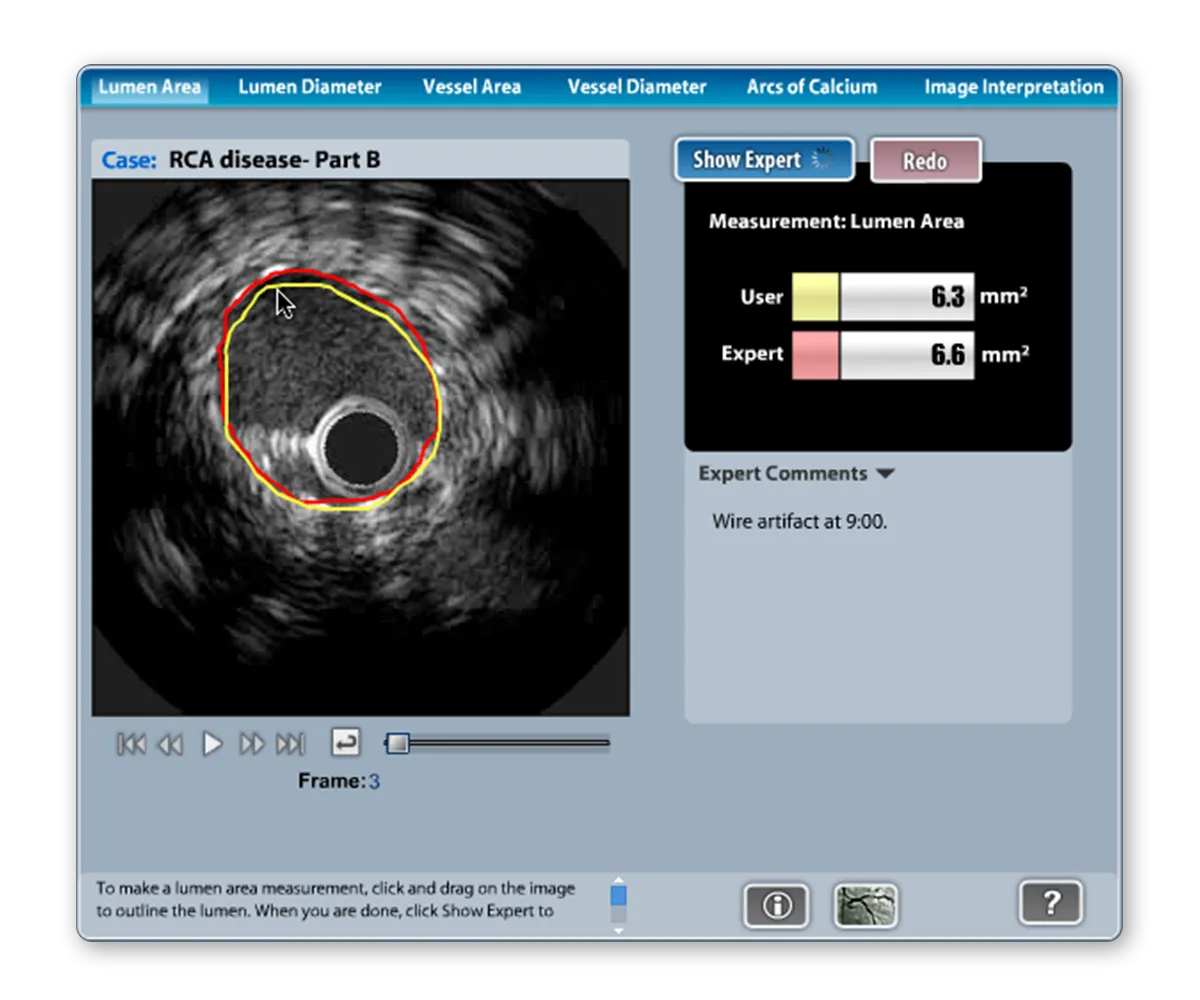
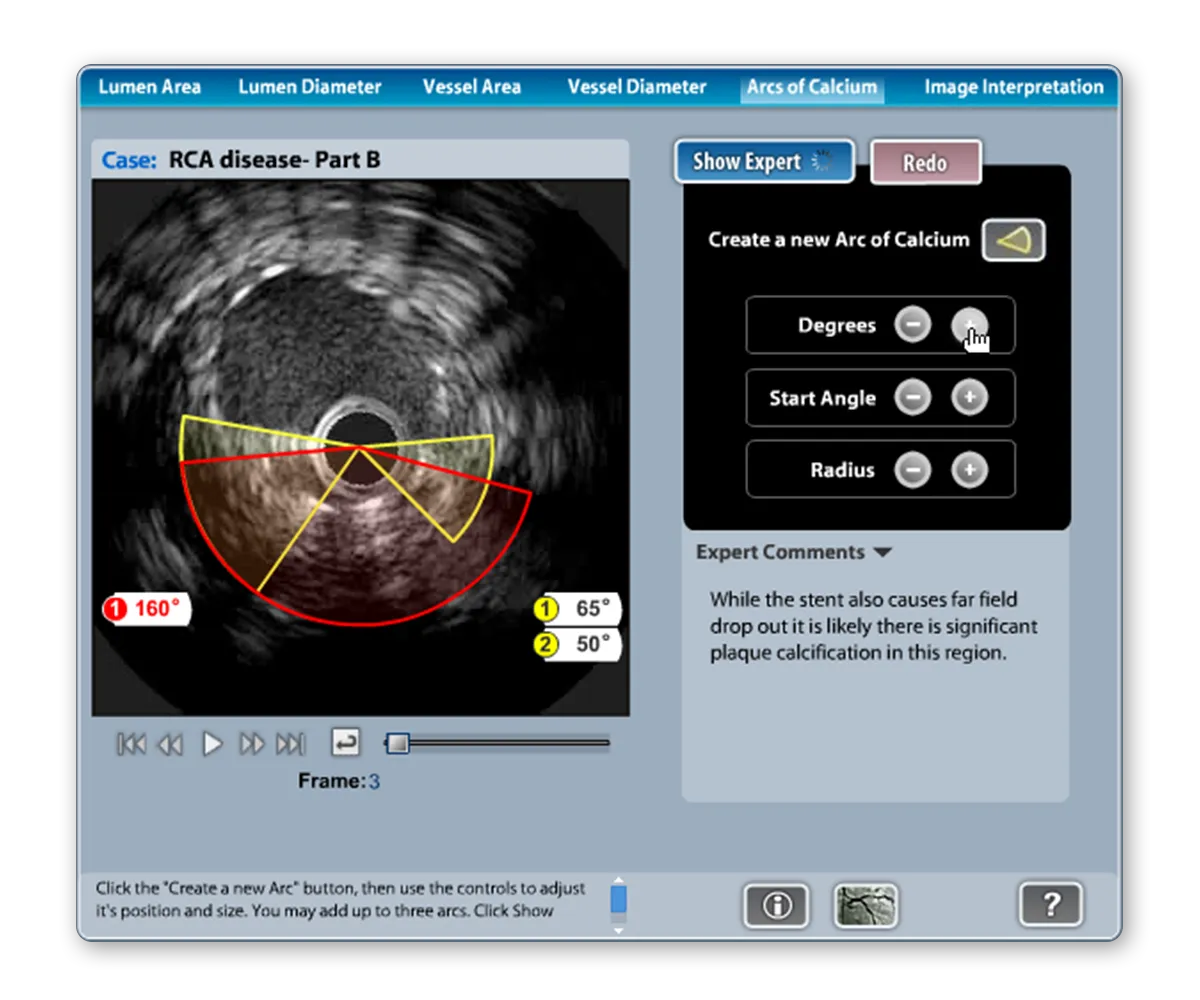
I was responsible for nearly all aspects of this project development, from getting hands-on time with the medical IVUS machine in person to gather experience on how it worked, to designing the UI, building and programming the Flash app framework, developing the public website that physicians used to access cases, handling transformation of proprietary medical movies to low-bandwidth interactive Flash sequences, developed pixel-perfect math to translate the real-world millimeter coordinates and measurements into Flash-based routines, and more.
The Problem
The Solution
The Story
In the early 2000’s, not long after the birth of the web itself, most cardiologists and physicians learned new imaging technologies in one of two ways: they were mentored by a senior physician while operating on a live patient, or they sat in a lecture hall and looked at a slide presentation.
That all changed with the development of a groundbreaking, web-based eLearning application called TeachIVUS. IVUS (Intravascular Ultrasound) was a new imaging technology that allowed cardiologists to get a 360 degree view inside a patient’s arteries to accurately measure the level and nature of a blockage.
Funded by industry partners and working with the medical expertise of a Cleveland Clinic cardiologist, I developed a Flash-based, fully-interactive simulator that aimed to give physicians access to the methods and procedures they would encounter when using a real-world IVUS machine.
We submitted this project for consideration in the 2004 Adobe MAX Awards and won the award for Best eLearning Experience, beating Toyota. This award validated our groundbreaking work and over 10,000 physicians from around the world used TeachIVUS to improve their patient outcomes.
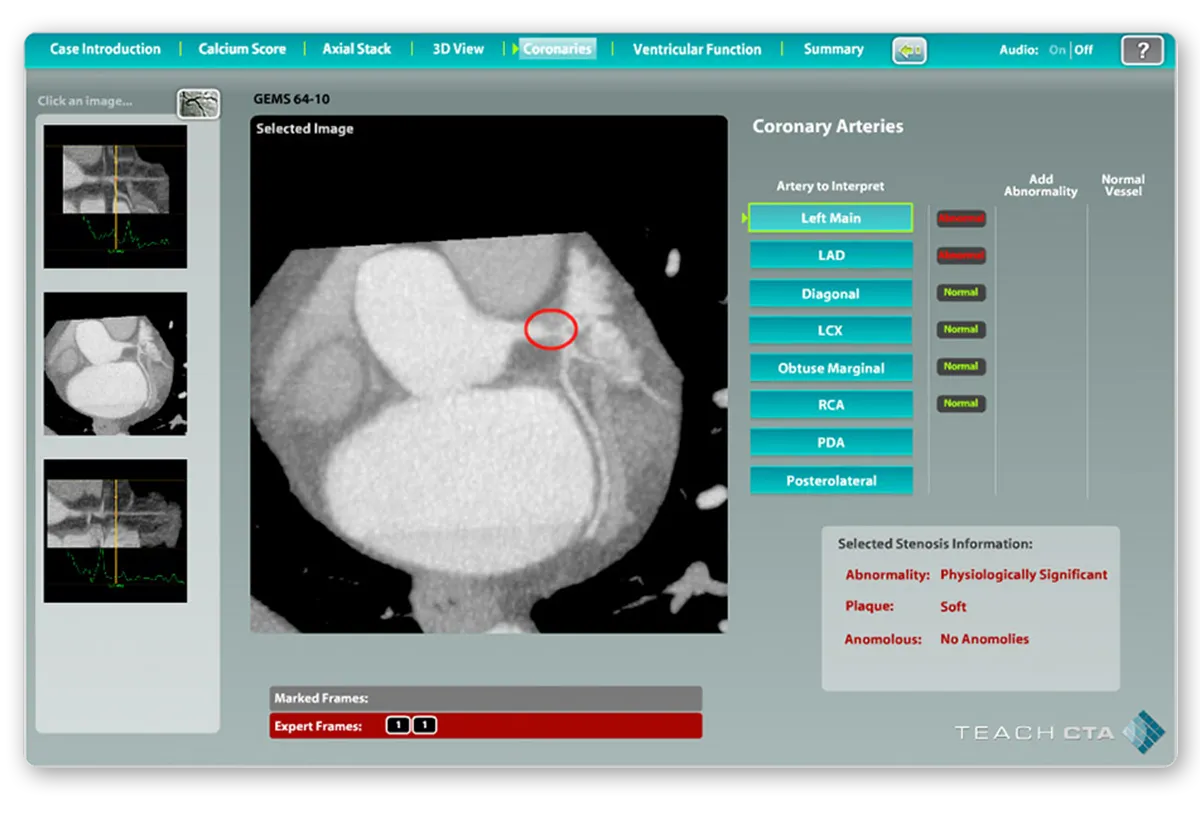
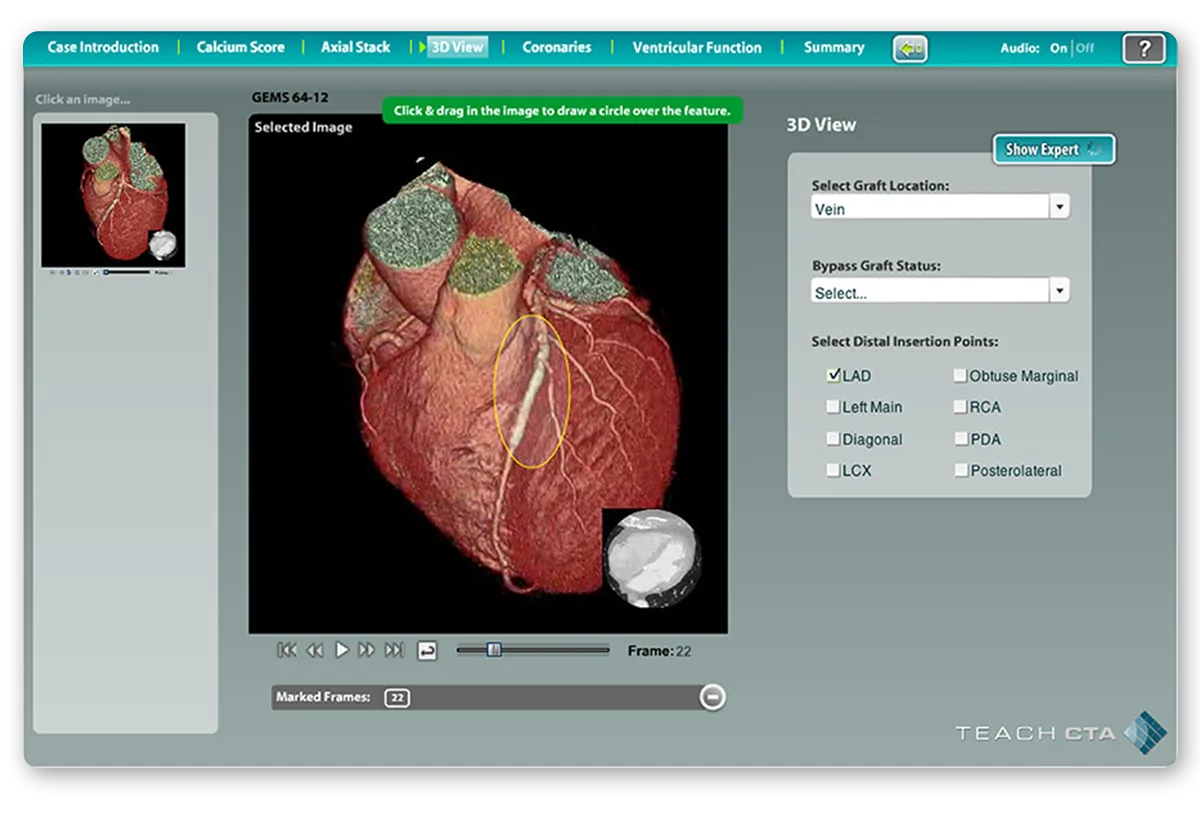
Two years later, in 2006, we became the first company to win two MAX Awards with our followup project, TeachCTA (beating TIAA-CREF, Honda, and Palm). This program built upon the success of TeachIVUS and gave physicians access to the world of CT Angiography. This project presented all new challenges in how to intuitively walk users through the key concepts of this incredibly complex imaging technology. Allowing doctors to rotate a 3D heart and make measurements on it was not easy in 2006...
While these projects were produced in a technology that sadly doesn’t exist anymore, the core aspects of both of these web-apps are fully relevant today. We had to take extremely complex subject matter and make it accessible to users that might not be experts on the web. We had to provide methods to instruct users on how to navigate difficult material with little or no instruction. We had to give both relevance and precision to the learning material, with the understanding that our app would directly translate to the treatment and quality of life for real patients.
I am very proud of this work and the experience of designing and developing them gave me deep insight into the methodology and importance of breaking down very complex concepts into usable results.